



Upcycling detergents: what does this concept mean?
Do you know that on July 28, 2022, humanity reached what planet Earth can produce in a year without being exhausted? It therefore becomes essential to transform what might be disposable into new products. How can upcycling help with this task?
This concept, like recycling and reuse, has taken on increasing importance in terms of valuing waste. Can it also be applied to the production of detergents?
In this article, discover what it is, its advantages, and what upcycled detergents are.
Meaning of upcycling
Natural resources are recurrently transformed into useful products for each of us. However, when they are no longer in good condition or while they are being used (for example, detergents), they end up being discarded.
At a time when cities around the world produce approximately 1.3 billion tons of solid waste annually, it is important to have sustainable practices and alternatives to disposal.
In order to minimize this impact, the concept of upcycling emerges as an alternative to this problem: the practice of using something that is disposable and transforming it into another "something" of value.
In practice, it is the reintroduction of materials into the market that were destined for disposal. The material that would be discarded becomes a new product with a new function. In this way, it is possible to reduce the waste of virgin raw materials.
It offers several benefits for companies, people, and the planet.
What is the difference between upcycling and recycling?
In recycling, certain products are destroyed into new materials that manufacturers use to create new products. For example, a soda can is crushed into small pieces, cleaned, and flattened. On the other hand, in upcycling, plastic bottles can become a jacket, and even old tires can become lining materials for a gym.
Through recycling, discarded waste is collected, processed, and reused. Some authors even argue that waste recycling is not a completely low-impact action, as it decreases product quality in each new life cycle.
This means that recycling can be considered downcycling. Therefore, downcycling is a type of recycling that we are used to doing, such as plastic recycling. Both recycling and downcycling are practices present in recovered products, and it is important to have practices that are closer to upcycling.
In summary, while recycling involves the destruction of what was discarded to create a product, upcycling uses what was discarded in its current state to create a new product.
What are the advantages of upcycling?
By reusing waste in its normal state and transforming it into new products, upcycling has several advantages.
Reduces the extraction of natural resources and energy
By recycling an existing raw material, there is no need to resort to natural resources to produce new products.
Saves materials that would be discarded, reducing landfill waste
Complementing the above idea, this recycling of existing waste to transform it into new products reduces accumulation in landfills.
Reduction of CO2 emissions
The fact that upcycling reduces the extraction of natural resources and does not undergo chemical processes in the treatment of raw materials reduces carbon emissions into the atmosphere.
Upcycled detergents: more than just detergents
We saw that upcycling is a concept where what would be discarded is reused and transformed into a product with a new function.
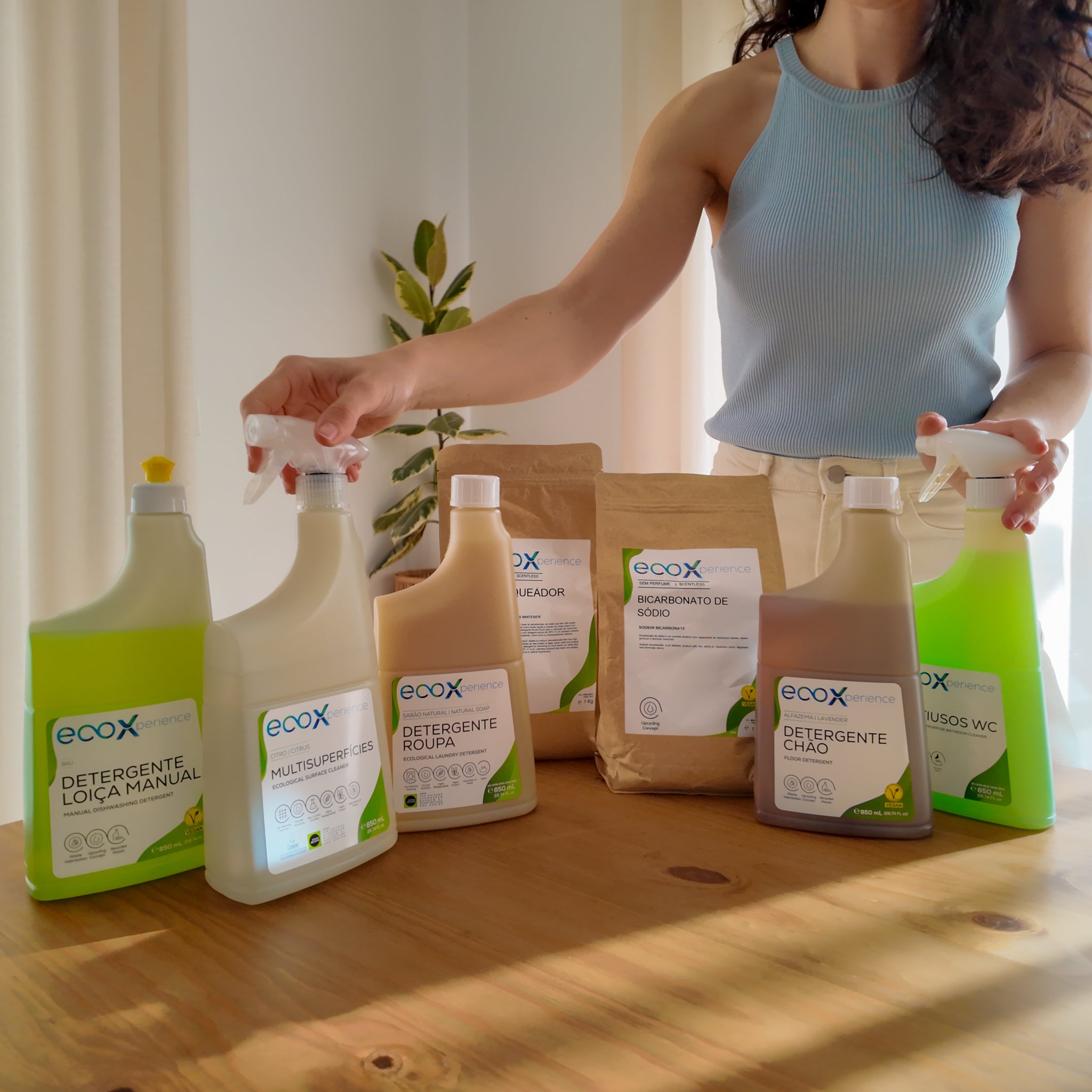
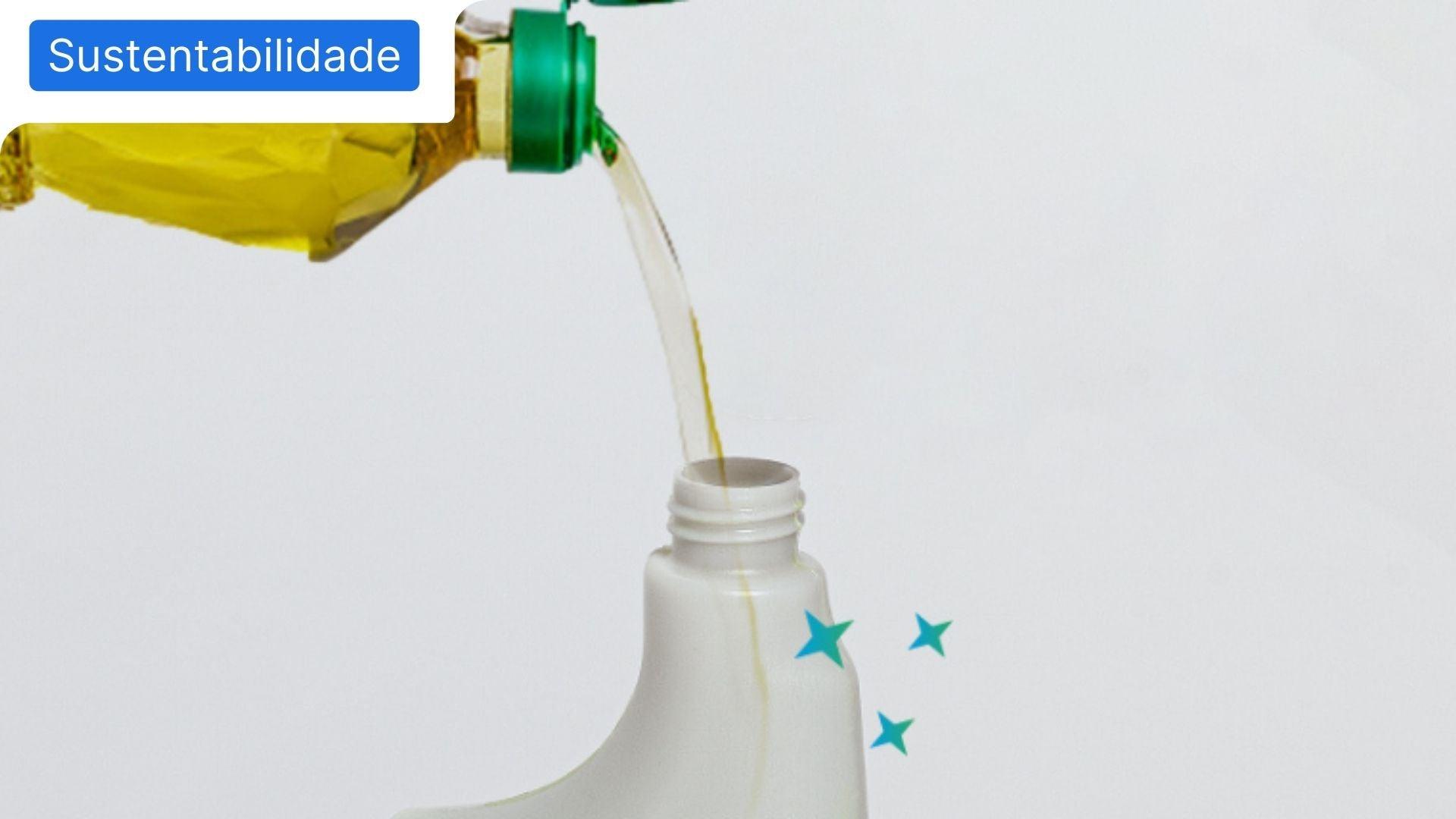
Transforming used cooking oil into detergents with low environmental impact is upcycling: there are several detergents on the market, but only EcoX is a world pioneer in this transformation.
What differentiates these upcycled detergents?
EcoX detergents have several differentiating points that align with the upcycling concept:
- 50% extraction of natural resources
We reduce the extraction of natural resources by +50% to produce our products.
Valorization of waste
One liter of used cooking oil has the capacity to contaminate up to one million liters of water (Quercus).
In one year, about 35 thousand tons of used cooking oil go down the drain in Portugal, and wastewater treatment plants spend about 300 million euros to remove it from the water. This is a residue that has several impacts on our homes, public networks, aquatic environment, soils, and climate.
By collecting and transforming this waste into detergents, through the public network and partner stores, we protect thousands of liters of water from pollution.
Renewable use of resources
Through the circular economy, it reuses ingredients and packaging and reduces the use of primary resources.
Now that you know and understand this entire concept, shall we continue upcycling together? You give us your used cooking oil, and we'll transform it into your detergents.


